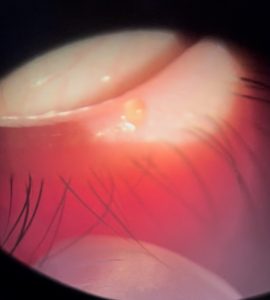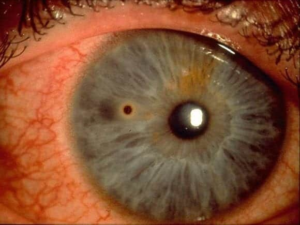
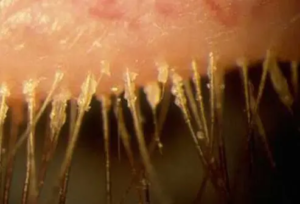
Blepharitis is inflammation of the eyelid margins and can cause redness, irritation, itching, burning, crusting, and debris along the eyelashes. Common contributors include meibomian gland dysfunction, bacterial overgrowth, rosacea, and Demodex mites. Treatment depends on the cause and may include eyelid hygiene, warm compresses, prescription medication, and other in-office or at-home therapies.
Blurry vision can result from common refractive errors such as nearsightedness, farsightedness, and astigmatism, but it can also be a symptom of an eye condition or other medical problem. A comprehensive eye exam can help determine the cause and whether glasses, contact lenses, treatment, or additional testing is needed. Sudden or significant changes in vision should be evaluated promptly, especially when accompanied by eye pain, flashes, floaters, or loss of vision.
Blurry Vision

Non Blurry Vision

A cataract occurs when the natural lens inside the eye becomes cloudy, causing vision to become blurry, hazy, or less vibrant. Cataracts commonly develop with age and may cause increased glare, halos around lights, difficulty driving at night, or frequent changes in your glasses prescription. During a comprehensive eye exam, our doctors can evaluate and monitor cataracts and, when they begin to significantly affect your vision or daily activities, refer you to a trusted cataract surgeon for treatment.
Diabetes can damage the small blood vessels in the retina, leading to diabetic retinopathy and other changes that can threaten vision. Because diabetic eye disease may develop without noticeable symptoms in its early stages, regular dilated eye examinations are important even when your vision seems normal. At Belmont Eye, our doctors evaluate the retina for signs of diabetic eye disease, monitor for changes, and coordinate referral to a retinal specialist when additional treatment is needed.

Flashes and floaters are common visual symptoms that often occur as the vitreous, the gel-like substance inside the eye, changes with age. Floaters may appear as specks, dots, lines, circles, or cobweb-like shapes, while flashes may look like brief streaks or flashes of light.
A sudden onset or increase in flashes or floaters can sometimes be a sign of a retinal tear or retinal detachment. If you develop new flashes or floaters—especially a sudden shower of floaters, a shadow or curtain in your vision, or loss of peripheral vision—contact Belmont Eye promptly for evaluation.
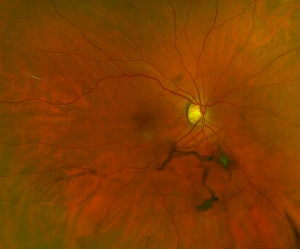
Glaucoma is a group of eye diseases that damage the optic nerve and can lead to permanent vision loss if left untreated. The most common form, primary open-angle glaucoma, typically develops gradually and often has no noticeable symptoms in its early stages. Because vision loss from glaucoma cannot be restored, early detection and ongoing monitoring are important.
A comprehensive glaucoma evaluation may include measurement of eye pressure, examination of the optic nerve, visual field testing, and imaging such as OCT. Our doctors diagnose and monitor glaucoma and develop an individualized treatment plan to help protect your vision.
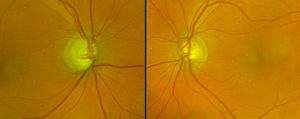
Red eyes can have many causes, including dry eye, allergies, blepharitis, contact lens irritation, environmental irritants, and eye infections. While some causes are minor, redness can also occur with conditions that require prompt treatment. An eye examination can determine the cause and appropriate treatment rather than relying on redness-relieving drops alone.
Contact Belmont Eye promptly if redness is accompanied by significant eye pain, light sensitivity, discharge, injury, or a change in vision.
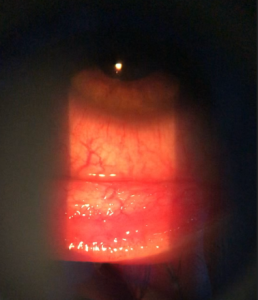
Gritty or scratchy eyes can feel as though sand or another foreign object is in the eye. This sensation is commonly associated with dry eye disease, meibomian gland dysfunction, blepharitis, allergies, or exposure to environmental irritants such as smoke, wind, and dry air.
If gritty eyes are persistent or accompanied by redness, burning, watering, or fluctuating vision, an eye examination can help identify the underlying cause and determine the appropriate treatment. Belmont Eye also offers advanced dry eye evaluation and treatment for patients with ongoing symptoms.
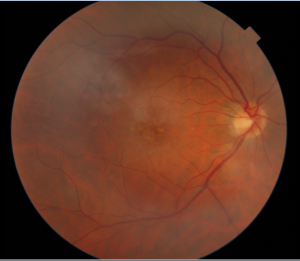
Age-related macular degeneration (AMD) is a disease that affects the macula, the central portion of the retina responsible for sharp, detailed vision. AMD can cause distortion, blurred central vision, or loss of central vision while peripheral vision may remain intact.
Risk increases with age and may also be influenced by genetics, smoking, cardiovascular health, and other factors. Because early AMD may cause few or no noticeable symptoms, comprehensive eye examinations and retinal imaging can be important for early detection and monitoring. If signs of AMD are detected, our doctors can monitor the condition and coordinate referral to a retinal specialist when appropriate.
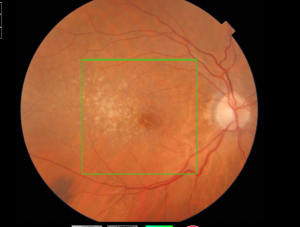
Meibomian gland dysfunction (MGD) occurs when the oil-producing glands along the eyelids become blocked or do not produce healthy oils. These oils are an essential part of the tear film and help prevent tears from evaporating too quickly. When the glands are not functioning properly, patients may experience burning, dryness, irritation, fluctuating vision, redness, or a gritty sensation.
MGD is a common cause of evaporative dry eye disease. At Belmont Eye, we can evaluate meibomian gland function and recommend personalized treatment, including advanced dry eye therapies when appropriate.